
pool owners hub
Green Pool Recovery: Step-by-Step
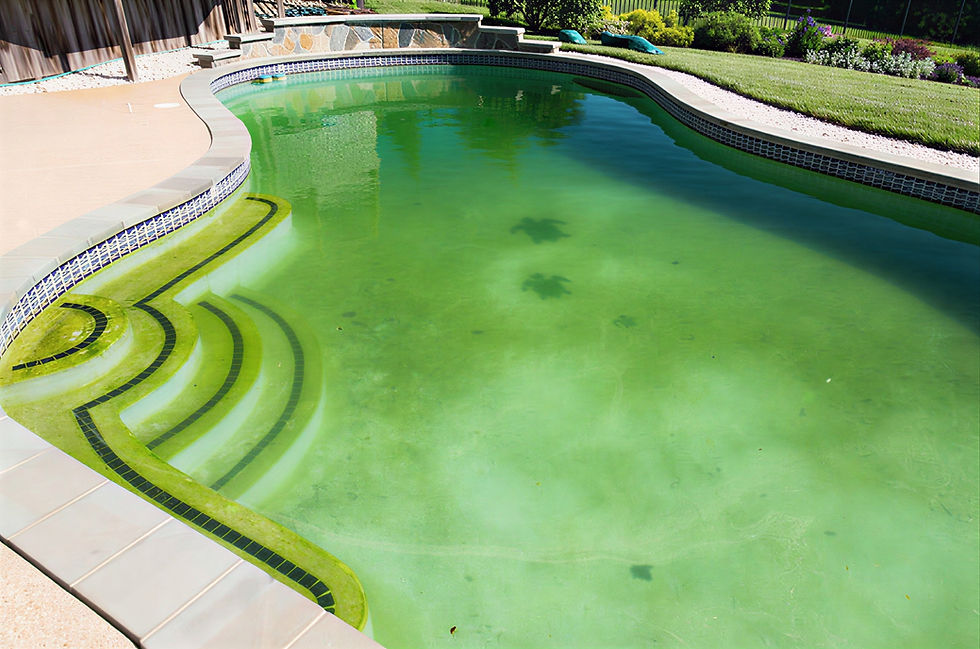
A green pool is one of the most common — and most disheartening — pool problems. One week everything is fine; the next, you're looking at something that resembles a swamp. The good news is that almost every green pool can be recovered. The challenge is knowing how to do it properly.
.jpg)
Why Pools Go Green
Green pool water is caused by algae — a rapid proliferation that occurs when conditions are right. Those conditions are: depleted or ineffective chlorine (due to low levels, high CYA, low pH, or phosphate overload), warm water temperatures, UV sunlight without adequate stabiliser, and nutrients from leaves, garden runoff and bather contamination.
A pool doesn't go green overnight. It goes green when small problems accumulate — a missed service, a run of hot weather, heavy rain diluting the chemistry — until conditions tip in algae's favour.
Assessing the Severity
Light green / hazy:
Green-tinged but you can still see the bottom. Early-stage algae. Recovers relatively quickly — 2–3 days with correct treatment.
Medium green:
Clearly green and visibility is reduced to mid-pool at best. Algae is established. Expect 3–5 days and multiple treatments.
Dark green / black-green:
Cannot see the bottom. Heavy algae load. May take 5–10 days. Multiple shock treatments will likely be required.
Black or mustard patches on surfaces:
Different algae species requiring specific treatment. Do not treat the same as green algae — call a professional.
Step 1: Test the Water First
Don't add anything until you've tested. The most common green pool mistake is shocking a pool with a severely imbalanced pH — chlorine is dramatically less effective outside the 7.2–7.6 range.
Test for: pH, total alkalinity, CYA, and free chlorine. At pH 8.0, less than 20% of chlorine is in its active form. Getting pH right before shocking is the single most important factor in treatment success.
Step 2: Balance the pH First
If pH is above 7.8, lower it to 7.2 before adding shock. This single step makes a massive difference to how well the shock treatment works. Also adjust alkalinity if it's outside 80–120 ppm — pH swings during treatment will undermine the process.
Step 3: Superchlorinate (Shock Treatment)
Once pH is correct, shock the pool with calcium hypochlorite (granular shock) or liquid chlorine. Recommended doses by severity:
Light green: 2× the normal shock dose (typically 200–300g per 10,000 litres)
Medium green: 3–4× normal dose
Dark green: 4–5× normal dose, likely requiring a second treatment
Apply shock in the evening — daylight degrades free chlorine rapidly. Add an algaecide after shocking to kill algae the chlorine doesn't immediately reach. Use a non-copper algaecide unless you know your pool type handles copper without staining.
Step 4: Brush the Pool Thoroughly
This is the step most people skip — and it matters. Algae clings to pool surfaces in a biofilm. Brushing disrupts the biofilm and exposes algae to the chlorine. Use a stiff brush on plaster or concrete, a softer brush on fibreglass. Brush every surface: walls, floor, steps, waterline. Do this before running the filter.
Step 5: Run the Filter Continuously
Run your filter 24 hours a day until the pool is clear. The filter is removing dead algae from the water — interrupting filtration at this stage means debris settles back to the floor.
Backwash or clean the filter every 12 hours during recovery, or whenever the pressure gauge rises. A clogged filter cannot clear the pool. For cartridge filters: remove and hose clean every 12 hours.
Step 6: Test and Repeat
Test chlorine levels the morning after shocking. If free chlorine has dropped to near zero, the algae load consumed it and you need to shock again. Keep chlorine elevated above 5 ppm until the water clears.
Once the water turns from green to blue-grey or cloudy, you're winning. Add a pool clarifier or flocculant to help the filter collect remaining fine particles. If using flocculant: set filter to "recirculate" while adding, turn pump off for 8 hours to let floc settle, then vacuum to waste the next day — do not filter the settled material.
How Long Does Green Pool Recovery Take?
Light green pool: 2–3 days with correct treatment
Medium green pool: 3–5 days
Severe green pool: 5–10 days, multiple treatments required
Recovery is extended by: incorrect pH during treatment, insufficient shock dose, high CYA restricting chlorine effectiveness, high phosphate levels, or inadequate filtration.
When to Call a Professional
DIY green pool recovery fails most often at two stages: treating a pH-imbalanced pool (reducing shock effectiveness by 60–80%) and insufficient filtration (running the filter on a timer so dead algae never fully clears).
Call Atlantis Pool Services if the pool doesn't respond to shock treatment after 48 hours, if you've shocked twice and the water is still green, if you see black or dark spots on surfaces (black algae requires different treatment), or if your filter appears to be struggling. We service North Lakes, Mango Hill, Kallangur, Redcliffe and surrounds — call (07) 3491 9700.


